
Why is tech billionaire Peter Thiel obsessed with Antichrist?
The Palantir boss is suspected of preparing the groundwork for digital feudalism.
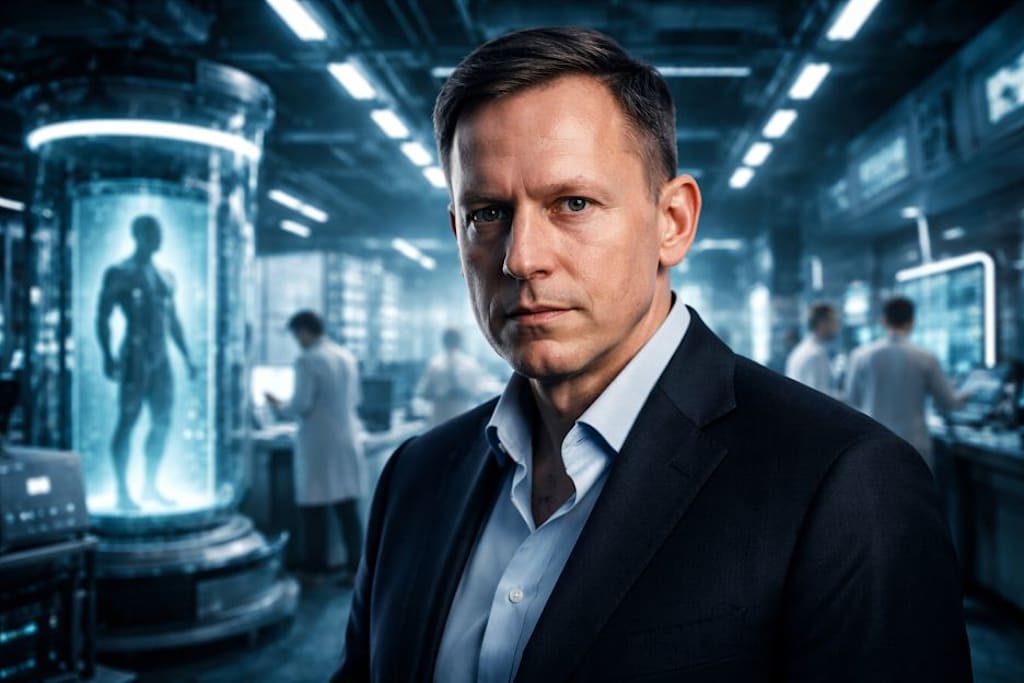
You may laugh off the idea that Peter Thiel - a billionaire entrepreneur, venture capitalist, and tech investor - who is not conventionally religious, would speak seriously about a biblical figure like the Antichrist. Yet, he does.
Not in private conversations, but in a series of public lectures delivered across major global cities (San Francisco and Paris). Not to familiar audiences, but to carefully selected groups.
His latest appearance - held in Rome in late March, within sight of the Vatican - suggests something more deliberate: a calculated intellectual and political provocation. But not against Christianity or any other religion but against the outgoing world order.
More precisely, Thiel is warning of - and advertising - the arrival of new times under a global government controlled by the world's tech elites.
What he pictures can be described as an era of "digital feudalism" (or oligarchy), because in his version of the future, the rest of us - like commoners during medieval times - would be nothing more than serfs, digital serfs.
A preview of such a world is the United States of America, where an intellectually weak leader (dreaming of becoming a full-fledged king), who is heavily indebted to his Silicon Valley donors, is transforming the country into a dictatorship in the service of powerful tech lords.
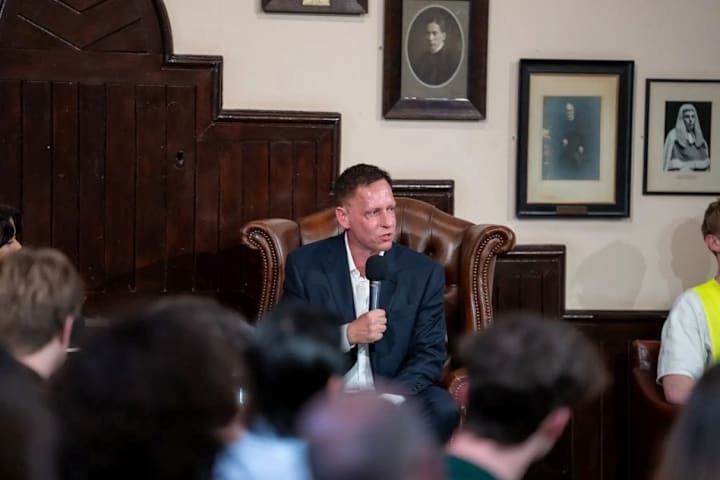
At first glance, Thiel's obsession with the Antichrist appears eccentric, even theatrical. But at a closer look, his discourse reveals a coherent, if controversial, worldview. His lectures are not really about theology in the traditional sense. They are about power, control, and the future structure of global governance.
Thiel's Antichrist campaign is, therefore, designed to test the nerves of the traditional political establishment, to plant seeds of a new "tech religion," and to attract followers among influencers and leverage holders.
The Antichrist as a political concept
During his closed-door meeting with tech folks in San Francisco, in Thiel said the Antichrist would be "someone who longs for a Nobel Peace Prize."
"A basic definition of the antichrist: some people think of it as a type of very bad person. Sometimes it's used more generally as a spiritual descriptor of the forces of evil," Thiel said during his first lecture. "What I will focus on is the most common and most dramatic interpretation of antichrist: an evil king or tyrant or anti-messiah who appears in the end times."
However, in later lectures Thiel's use of the word "Antichrist" functioned more as a political and philosophical metaphor. In his new interpretation, the Antichrist is not necessarily a single individual but a system - a global, centralized authority that promises safety from existential threats (such as nuclear war, climate collapse, or artificial intelligence) while ultimately imposing total control.
This framing flips the conventional understanding. Rather than portraying the Antichrist as chaos or destruction, Thiel at one point associates it with order: a technocratic, one-world regime that eliminates risk at the cost of freedom.
In this sense, Thiel has invested billions in and is building technologies - especially through his Palantir Technologies - that enable precisely such control.
The philosophy behind Thiel's thinking
To understand Thiel's thinking, one must remember René Girard (1923–2015), a French historian, literary critic, and philosopher best known for developing a powerful theory about human behavior called mimetic desire - the idea that humans imitate each other's desires over and over again, leading to rivalry and conflict.
The theory's central claim is that human desire is not original - it is imitative. Here's a short practical example:
- If two people desire the same thing, then rivalry emerges
- Rivalry grows into a conflict, which spreads
- The conflict threatens the social order
This mechanism, according to Girard, is universal - it operates in relationships, markets, politics, and even culture. To stop escalating conflict, societies unconsciously developed the following solution: they blame a single individual or group (scapegoat), redirect violence towards this target, restore the social order - which survives until rivalry reappears.
A closed loop cycling through generations.
Thiel has adapted this theory into both business strategy and political doctrine. In economics, he rejects competition as destructive "mimetic violence," advocating instead for monopolies as stable, value-generating structures. This idea is laid out in his book Zero to One.
In technology, this translates into platforms that shape and amplify human desire at scale. His early investment in Facebook is often cited as an example: a system designed to capture attention, influence behavior, and monetize imitation.
The implication is profound: if human beings are driven by imitation, then those who control the mechanisms of imitation - algorithms, social networks, data systems - effectively control society.
Thiel skips, however, explaining whether those in control of the above-mentioned mechanisms also imitate their pears or act "independently."
From "Pay Pal Mafia" to political theology
Thiel's trajectory reflects a broader transformation within Silicon Valley. What began as entrepreneurial innovation has evolved into a form of geopolitical power. Alongside figures like Elon Musk and networks such as the so-called "PayPal Mafia," Thiel helped build infrastructures that now shape communication, labor, and governance globally.
Clarification:
The "PayPal Mafia" is an informal term used to describe a group of early employees and founders of PayPal who went on to become some of the most influential figures in Silicon Valley after the company was sold in 2002.
It's not an official organization, but a tightly connected network of entrepreneurs, investors, and executives who worked together at PayPal in the late 1990s–early 2000s, built strong personal and professional ties, reinvested in each other's ventures afterward, and played a disproportionate role in shaping the modern tech ecosystem.
To imagine the collective power of this group, let's count a few of them and their business associations or investments: Peter Thiel (Palantir Technologies, Facebook), Elon Musk (SpaceX, Tesla, X), Max Levchin (Affirm, Slide, Facebook), Reid Hoffman (LinkedIn, Greylock Partners, Microsoft), David Sacks (Yammer, Craft Ventures, Uber, Airbnb), Roelof Botha (Sequoia Capital, Square, YouTube).
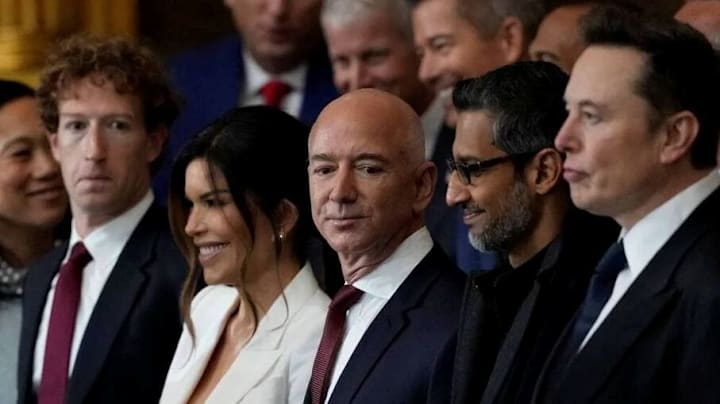
This ecosystem is not accidental. It is rooted in a shared ideological framework that blends libertarianism, technocracy, and elements of the transhumanism and long-term thinking. These philosophies prioritize future outcomes - often at the expense of present democratic norms - and view technology as the primary tool for overcoming human and societal limitations.
Within this context, democracy appears increasingly inefficient. If public opinion is driven by "irrational" mimetic dynamics, then democratic decision-making becomes unstable and dangerous. The alternative, in Thiel's framework, is a system governed by data, prediction, and elite control.
Democracy grave-diggers
Critics argue that Thiel is not merely diagnosing the weaknesses of liberal democracy - he is actively accelerating its decline. By promoting technologies that centralize information and influence behavior, while simultaneously supporting political movements that challenge democratic norms, Thiel contributes to a feedback loop that weakens institutional stability.
Donald Trump, in this context, is not accidental; the chaos has been planted by the American tech oligarchy deliberately.
Thiel's support for Donald Trump, JD Vance and other right-wing political figures must be interpreted within this framework: not as conventional partisanship, but as part of a broader effort to disrupt the liberal order.
At the same time, tools developed by Palantir Technologies integrate deeply into state and military systems, enhancing surveillance and predictive capabilities. This dual strategy - weakening democratic structures while strengthening technocratic control mechanisms - creates what some analysts describe as an "asymmetrical power shift."
The ultimate goal
What, then, is Thiel ultimately trying to achieve? What's his angle with the Antichrist?
He is already fabulously wealthy - $28–30 billion (Forbes, March 2026) - and utterly influential.
Thiel's goal is not simply wealth or influence, but the construction of a new political order. He envisions a future where traditional nation-states decline, replaced by a networked world dominated by technologically empowered elites.
In this scenario, power no longer resides in governments but in those who control data, capital, and infrastructure. Society becomes stratified between "sovereign individuals" - a mobile, highly skilled elite - and a broader population with severely diminishing agency.
This "neo-medieval" vision offers us a fragmented world where authority is privatized and governance is decentralized but not democratic, where a handful of individuals control the future.
Selling the Apocalypse
Thus, Thiel's Antichrist discourse serves a strategic function within this broader vision. By framing the future as a binary choice - totalitarian control or catastrophic collapse - he narrows the range of acceptable solutions. This "apocalyptic logic" creates a sense of urgency that justifies radical interventions.
In his interpretation, humanity faces existential risks that cannot be managed through traditional democratic processes. Therefore, extraordinary measures - centralized control, predictive governance, technological oversight - become not only acceptable but necessary.
This is where the Antichrist metaphor becomes most revealing. It represents both a warning of an incoming evil and a justification to prepare society for a transition to a new system - a shift from democratic governance to technocratic management - in order to contain that evil.
In this context, his lectures function as ideological and political conditioning. The Antichrist is expected to scare people into willingly accepting a world governed not but citizens but by systems, which in turn are controlled by "Pay Pal Mafia" networks.
In essence, Thiel & Co offers nothing new. First, they create chaos; later, they come as saviors to restore order.
The question that naturally arises - one that is often used to reassure skeptical observers - is whether these powerful tech lords will live long enough to see their long-term visions realized. After all, many of them are no longer young, and transformations of this scale unfold over decades, not years, so they could be gone before the project is complete.
Sadly, this line of reasoning may miss the point. For them, longevity is not merely a biological constraint but an active frontier. Through investments in biotechnology, longevity research, artificial intelligence, and life-extension ventures, they are not simply waiting to see the future unfold - they are attempting to extend their own presence within it.
In that sense, the question is not just how long their plans will take, but how far are they willing to go to remain part of the world they are shaping?
The truth is, far enough to make time itself an engineered variable.
They are working hard on this too.
About the Creator
Keep reading
More stories from Aurel Stratan and writers in Futurism and other communities.
Russian "consultants" tried for plotting to destabilize Angola
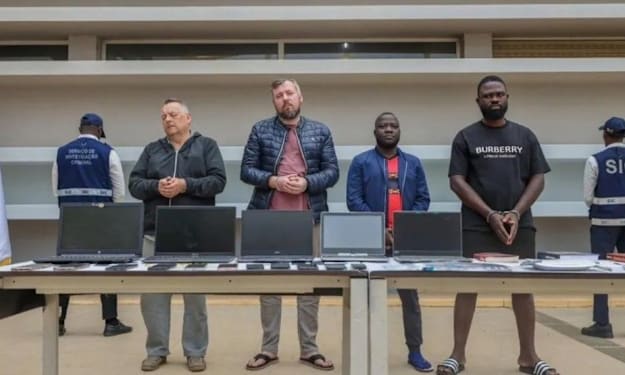
In August 2025, Angolan police stormed an apartment rented by two Russian nationals in central Luanda. The men - who were in the country as "tourists" - were actually operatives in a sophisticated plot to destabilize one of Africa's most resource-rich nations.
By Aurel Stratanabout 6 hours ago in Criminal
How machines can learn from human behaviour
In order to understand where we are and where we are going, we need to understand where we were first. - Susan Fourtane Could a human behaviour simulator be embedded into a robot or online avatar to the point that it’s hard to distinguish between a real person or artificial intelligence? Scientists have been upping the stakes in this “Turing test” for years, to the point that human-mimicking programmes are ready to answer tricky questions, assist people with online shopping or be companions.
By Susan Fourtané 19 days ago in Futurism
Saudi Arabia Entertainment and Amusement Market: Digital Entertainment, Youth Demographics & Future Opportunities
According to IMARC Group's latest research publication, Saudi Arabia entertainment and amusement market size reached USD 5,468.4 Million in 2025. The market is projected to reach USD 11,542.2 Million by 2034, exhibiting a growth rate (CAGR) of 8.65% during 2026-2034.
By Faisal Al-Harbi4 days ago in Futurism
Something Is Beginning, I Think Challenge Winners
This challenge wasn’t about clean starts. It was about that weird in-between where something is beginning, but no one really knows what yet. A lot of these stories leaned into hesitation, into pauses and false starts and that feeling that something is about to happen but hasn’t quite.
By Vocal Curation Team6 days ago in Resources



Comments
There are no comments for this story
Be the first to respond and start the conversation.