
How the 18th-century British Army Really Worked — and Why It Shouldn't Have
British officers bought their ranks and took their servants with them on campaign. Their soldiers were considered the dregs of society. Together, they built an empire.

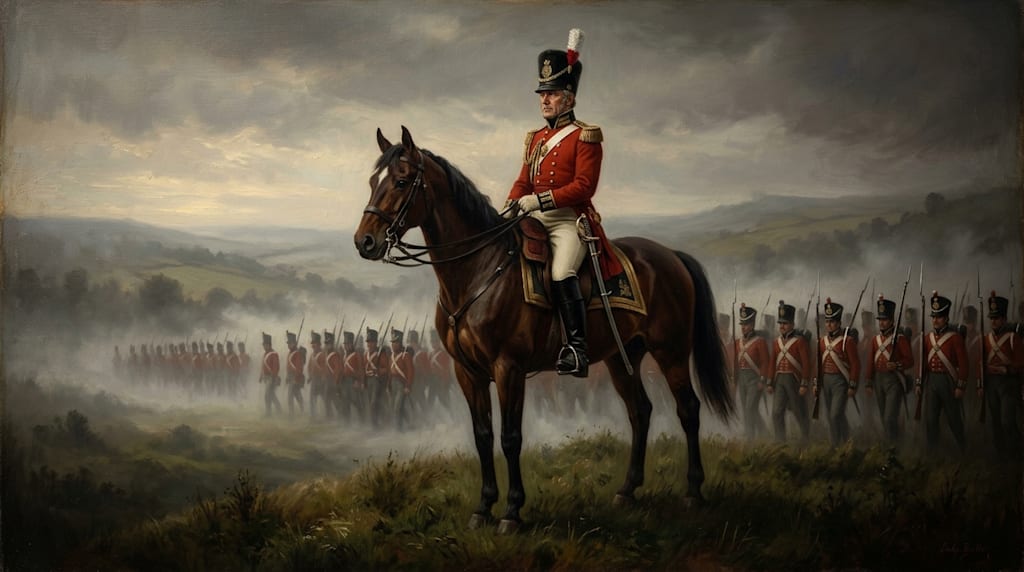
A particular kind of irony lies at the heart of the 18th-century British Army.
The men who carried muskets, slept in the mud and bled on battlefields everywhere from Quebec to Calcutta were considered by polite society to be no better than criminals.
Joining the army was something you did when you had nothing: no land, no trade and no future. The uniform was a symbol of desperation, not distinction.
The men who led them had never studied war. They had bought their way in.
Together, they conquered half the world.
Who Actually Joined?
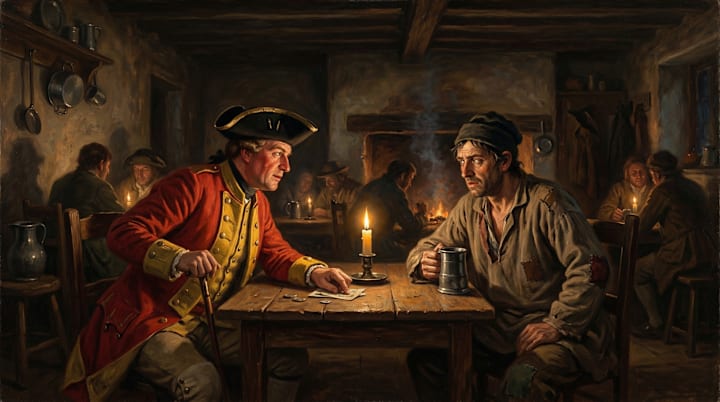
Forget the romantic image of the patriotic volunteer. The 18th-century British Army was a magnet for the destitute.
If you were a man without land or a trade and had no money, the army offered something rare: guaranteed meals, shelter, and regular pay.
It's no coincidence that a significant proportion of the troops were Irish and Scottish — men from the margins of the Empire, fighting to sustain it.
Recruitment wasn't always above board. The practice of crimping — dishonest enlistment — was well established. A working-class man might stop into a tavern for a drink and wake up the next morning having somehow signed His Majesty's enlistment papers.
Methods ranged from persistent plying with alcohol to outright coercion once the target was sufficiently incapacitated.
Despite this, the army remained small. During the major wars between 1739 and 1800, its total strength fluctuated between 60,000 and 100,000 men.
Britain relied on naval supremacy and subsidised continental allies rather than large land armies. Quality over quantity, as the theory went.
The Food Was Actually Decent
Once enlisted, a soldier's daily life was grimmer than the recruitment pitch suggested — but not when it came to food.
The standard ration was surprisingly nutritious, consisting of beef or mutton broth, boiled potatoes, oatmeal, bread and meat pies. For someone who might otherwise have gone hungry, army food was a genuine improvement.
However, extras had to be purchased from local civilians at the soldier's own expense.
Alcohol was also provided — weak beer before bed and rum on holidays — but there was a catch. Drink was not part of the official state ration. The men had to pay for it themselves.
Discipline: Brutal but Bureaucratic
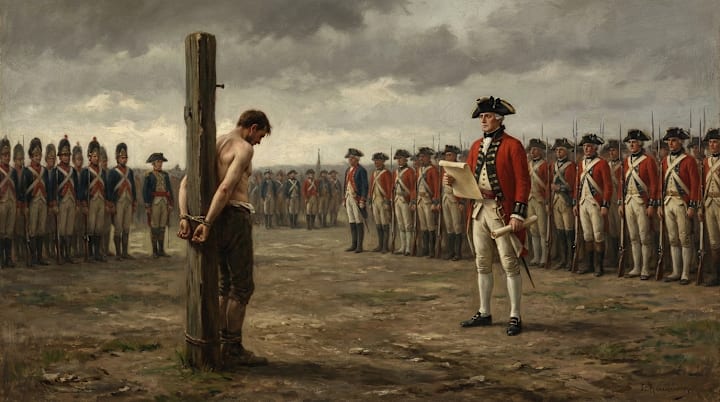
The lash was the primary tool of control. Drunk on duty? Flogged. Disrespecting an officer would result in flogging. The 18th-century British Army did not shy away from pain.
What set it apart from some continental armies, however, was its insistence on paperwork. Even while administering a flogging, the presiding officer was legally required to ask the soldier his surname to ensure that the punishment was properly recorded in the regimental books.
Brutality filed in triplicate.
Desertion was treated as the gravest crime. A deserter would be flogged and then branded on the face with the letter D — a permanent mark that would follow them for life.
Some continental armies mutilated deserters by slicing off their noses. The British preferred a mark that could not be hidden or removed.
The Officers: Aristocrats with Chequebooks
Almost without exception, the men commanding these soldiers had purchased their positions.
The British Army operated a transparent, official system of purchased commissions. There were no bribes or favouritism — just money. An 18-year-old from a wealthy family could pay the going rate and receive a lieutenant's rank.
The same principle applied to promotion: sell your current commission, add your own funds, and buy the next rank up.
There was no military staff college for infantry or cavalry officers. The Royal Military Academy at Woolwich, founded in 1741, only produced engineers and artillerymen. If you commanded infantry, you learnt by doing — usually at the expense of your men.
Officers didn't just outrank their soldiers. They lived in a completely different world. During campaigns, they pooled money for better food and brought their own civilian servants.
The management of enlisted men actually fell to sergeants and corporals. At best, an officer's relationship with his troops was administrative; at worst, it was merely ornamental.
In the North American colonies, British regulars were mockingly called Lobsters — a reference to their red coats. The contempt was mutual and ran across the class divide in both directions.
Where It All Fell Apart
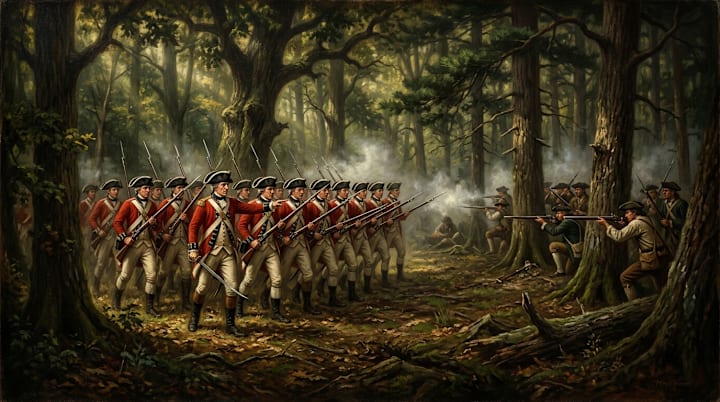
The American War of Independence exposed the flaws in the system.
British officers, who had been trained in linear tactics on parade grounds, found themselves outmanoeuvred by colonial militias who were fighting in terrain that the manuals had not accounted for.
American officers — many of whom had learned their craft from the same British military texts — adapted. The British, by and large, didn't.
This was the logical conclusion of an army led by men who had purchased their authority rather than earned it, fighting soldiers who had nothing to lose and everything to prove.
The Truth
Strip away the mythology and the 18th-century British Army was a small, professional force made up of volunteers who had no other options, led by aristocratic officers with no formal training.
The army was sustained by hiring local civilians to perform non-combat roles such as smiths, farriers and labourers, enabling soldiers to focus on fighting.
It was brutal. It was class-obsessed. By almost any modern standard, it was deeply unjust.
However, it was also the institution that laid the foundation for the largest empire in history.
The men who built it were considered the dregs of their society.
As usual, history forgot to mention that part.
About the Creator
Chronicle and Void
Every collapse has a cover story. Every invention has a stolen credit. Every war has a cause that didn't make it into the history books. I uncover those truths.
Keep reading
More stories from Chronicle and Void and writers in History and other communities.
The Perfect Heist That Broke the King: The Mystery of the Templar Treasure.
At dawn on 13 October 1307, French soldiers simultaneously burst through the doors of every Templar house in the kingdom on a single command. It was one of the most coordinated arrests in medieval history. Thousands of knights were arrested. One day. No warning.
By Chronicle and Voida day ago in History
Year 1818 Fun Facts, Trivia, and Historical Events
This quick read presents a collection of fun facts, trivia, and historical events from the year 1818. Discover the year’s top news stories, most influential people, historic firsts, famous birthdays, retail prices, and much more.
By Gregory DeVictor2 days ago in History


Comments
There are no comments for this story
Be the first to respond and start the conversation.