Dr. Mozelle Martin
Bio
Behavioral analyst and investigative writer examining how people, institutions, and narratives behave under pressure—and what remains when systems fail.
Stories (141)
Filter by community
Why Predators Still Use Kik
The Kik app is old, and that is part of why it still shows up in ugly cases. People tend to assume predators are always chasing the newest app, the newest trend, the newest coded space where adults have not caught up yet. Some do. A lot don't need to. They return to tools that already solve the problem they have. Speed helps. Soft identity helps. Fast movement into private chat helps. Low-friction contact helps.
By Dr. Mozelle Martinabout 19 hours ago in The Swamp
Why Families Used to Have 10+ Kids
People now talk about very large families as if they were mostly a lifestyle choice, a quaint old custom, or proof that people back then simply loved children more than people do now. That version is easy to repeat because it is warm, simple, and harmless on the surface.
By Dr. Mozelle Martina day ago in Humans
What “Stupid Mistakes” Really Say About a High-Functioning Brain
There is a special kind of humiliation in misspelling the name of someone you know perfectly well. Not a stranger. Not a difficult name from a form you only saw once. I mean the name of somebody close enough to your life that your brain could recognize it half asleep.
By Dr. Mozelle Martin3 days ago in Psyche
When Population Panic Goes Viral
A chart shows up in a feed. The numbers are clean. The colors look official. Somebody adds one loaded word like “extinction,” and within minutes the comment section is full of panic, rage, and certainty. That sequence is common now.
By Dr. Mozelle Martin5 days ago in Humans
Restorative Justice, Without the Hype
A victim leaves court with paperwork in hand, a case number attached to the worst day of her life, and a strange empty feeling she did not expect. The offender was processed. The lawyers spoke. The judge ruled. The file moved. From the outside, the system did what it was built to do. From the inside, a lot of people still walk away feeling as though the central fact never got touched. Harm happened. Everybody talked around it.
By Dr. Mozelle Martin5 days ago in Criminal
The Squirrel Mirror:
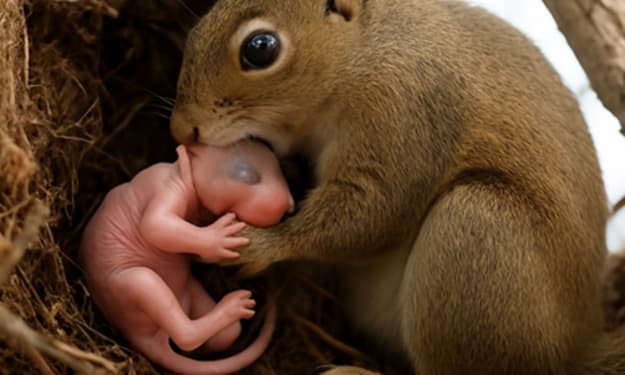
Humans love the idea of animals behaving nobly. The image of a squirrel cradling a tiny pink newborn seems to confirm our deepest hope—that love and care transcend instinct, species, and bloodlines. Social media amplifies this comforting myth with the same captioned claim: “Squirrels will adopt another squirrel baby if its parents die or can’t care for them.” It’s sweet, shareable, and slightly anthropomorphic.
By Dr. Mozelle Martin9 days ago in Earth
The Fast Pick Problem
The meet-and-greet lasts about 12 minutes. A volunteer opens the door and brings in 2 dogs. One heads straight for the family, tail moving hard, body loose, climbing halfway into a lap before the adults have even settled into their chairs. Everybody laughs. The kids light up. Somebody says, “Well, I guess we know who picked us.”
By Dr. Mozelle Martin10 days ago in Petlife
The Disappearing Art of Self-Respect
There is a discussion most people avoid because the minute it begins, the room usually splits into two (2) shallow camps. One side insists clothing carries no social meaning and should never be interpreted. The other treats any discussion of self-presentation as moral panic wearing respectable clothes.
By Dr. Mozelle Martin14 days ago in Families
Why Animals Entered Empty Cities:
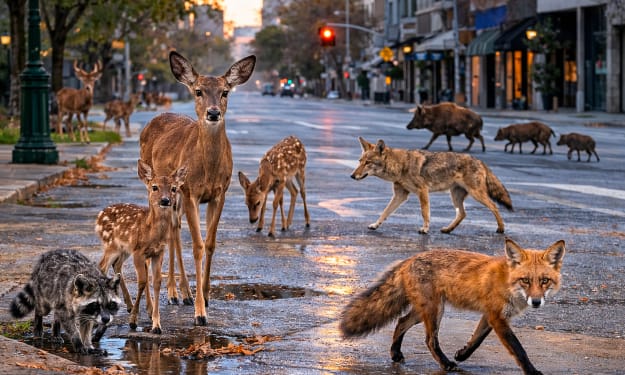
In 2020, cities did not become wild. They became quiet enough for wildlife to take different risks. Traffic dropped. Foot traffic faded. Public spaces lost the noise and motion that usually keep animals at the edge. Then came the images people remember: deer in roadways, coyotes in urban corridors, goats moving through town, boar entering city zones they normally avoided. Many people called it nature reclaiming the earth. That interpretation was poetic. It was also wrong.
By Dr. Mozelle Martin15 days ago in Humans
Romance Scams:
Every generation invents new ways to exploit human need, and the current one has perfected it through charm. The modern romance scam is not a single crime; it is a behavioral industry with global reach and local victims. It operates through empathy extraction—the deliberate hijacking of emotional circuitry under the illusion of connection. In other words, love as bait, routine as leash, and urgency as the kill switch.
By Dr. Mozelle Martin17 days ago in 01