history
The history of warfare; stories of combat and conflict across land, seas and skies, from ancient times to the present.
From Decoration Day to Memorial Day
Memorial Day began as Decoration Day but this term is seldom used now. I can recall my grandmother and others of her generation saying Decoration Day but as a child, I did not ask why. I now know that originally this was a day to “decorate” the graves of American war veterans. Memorial Day as we call it now is now a federal United States holiday. The purpose of this date is for mourning and honoring all military personnel who died serving in the US Armed Forces. I can remember my grandma and others placing flowers on the graves of our relatives who fought in WWI and WWII. This was also a time to check in the graves of nonmilitary loved ones. We had no cemetery caretaker and men from our small African American church volunteered to upkeep the area.
By Cheryl E Preston6 years ago in Serve
The Volcano Rumbles Before it Erupts
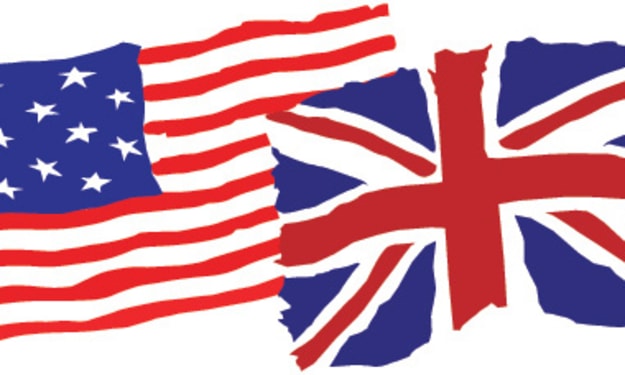
The War of 1812 (lasting from June of 1812 to February of 1815) was a conflict which acted as a “Second War of Independence” to signify the lasting power of this upstart constitutional republic known as the United States, and the last war which the US would engage with the military power of Great Britain. Yet, it is also a war for which little of it is remembered by modern generations of Americans or even people who live across the pond. To many Britons, 1812 was the year of Napoleon’s failed Russia Campaign. Though the war is still remembered by many native tribes and Canadians. To them, this war was their chance to walk into the spotlight and defend their own versions of freedom, liberty, and sovereignty; even if their efforts would result in accidental victory or honorable defeat. Yet, people still wonder how this atmosphere of nationalistic violence came to be. What were the events which transpired that caused the final war between the US and Great Britain? Who were the figures who stirred the political pot too fast or two hard, until the hot water spilled all over the place? This essay seeks to answer such questions and observes the positions of all sides who would find themselves at each other’s throats with muskets, swords, cannons, and scalping knives.
By Jacob Herr6 years ago in Serve
The Battle of Preveza
In 1538, the Mediterranean Gulf of Arta would become the battle ground between two opposing forces. As the Ottoman Empire seeks to expand it’s territory and cultural influence into the heart of Europe, the Kingdom of Spain, the Republic of Venice, and even the Papal States, fear for the loss of their status as world powers, their sovereignty as independent nations, and their freedom as human beings. For if their leaders and people were to act blissfully ignorant to the marauding hordes of the Ottoman Turks upon their arrival to their doorsteps, they would surly become lambs of God among the wolves of Allah. Fueled by political and religious ideologies, these diametrically opposed entities would use the latest of military technology and strategy to shed their blood. For the victors would become the most dominant naval force of the Mediterranean Sea; and remembered by the annals of time and history as a new generation of ruthless conquerors or faithful crusaders. The purpose of this essay is to is to analyze the critical intangibles and x-factors which determined the Battle of Preveza’s outcome, and how it shaped it’s political fallout for both the Europeans and the Ottoman Empire.
By Jacob Herr6 years ago in Serve
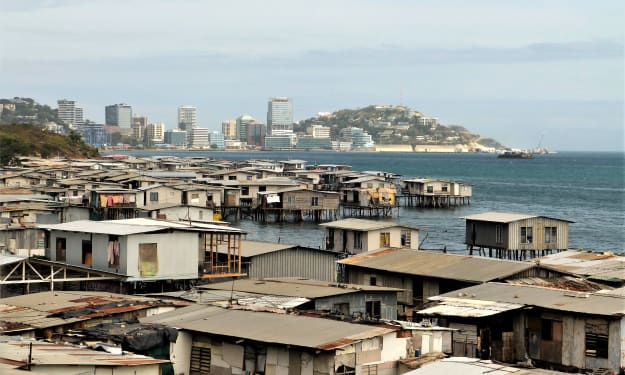
Australia’s Kokoda Track Campaign Rivals Midway as the Turning Point in the Pacific War
Photo by gailhampshire Kokoda Day is a National Holiday in Australia and marks the Kokoda Track Campaign, which was won by an unlikely cast of teenage reservists. Yeah, some continental location somewhere was secured by a collection of brave kids, and Down Under has something to celebrate. Sounds like a mere redirect, while everyone else remembers heroics that extend beyond a local footnote. But the truth is any nation that fought the Japanese should probably have a day set aside on their own calendars.
By Rich Monetti6 years ago in Serve
When the Cornfields Ran Red with Blood
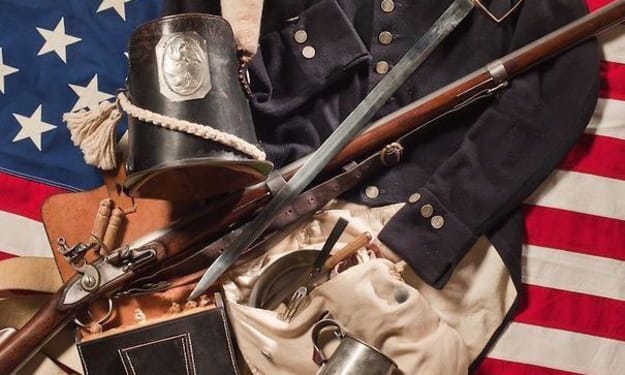
In the long term of the human condition, a true spoil that belongs to the victors of human conflict is the history for which their efforts will be remembered by future generations to come. No stronger does this correlate than in an event described as “America’s Second War of Independence”; The War of 1812. This war marks a secondary process of military violence between the young United States and the British Empire in order to secure permanent sovereignty on the North American continent and would cost over 15,000 American, British, Canadian, and Indigenous lives. Surprisingly though, there is an irony which lies in how our modern generations have metaphorically shrugged aside the historical importance of this conflict. Even the author and state-historian, James H. Madison writes only three paragraphs about the wartime experience in the then Indiana Territory in his 400 page book Hoosiers: A New History of Indiana. Certainly, the events that took place in Indiana are rather miniscule compared to the Burning of Washington or the Battle of New Orleans. However, I wish to argue that the strategic value of the Indiana Territory at the time was equally as important as the White House or the bayous of Louisiana. For Hoosiers, the War of 1812, is utterly consequential as part of Indiana’s state-based identity. This is largely in part due to the numerous native nationa, united under the Shawnee Chief Tecumseh, and were willing to fight to the death to protect their sovereign lands surrounding the Great Lakes; as well as the dire American holdouts, which would retain U.S. dominance in the territory; even when under the threat of annihilation.
By Jacob Herr6 years ago in Serve
HMS Birkenhead
Introduction Hopefully, none of you readers have been in a shipwreck before. But if you have and were lucky enough to get off alive, I’m sure you’ve heard this phrase which is most commonly associated with the sinking of the Titanic: “Women and Children first” when loading the lifeboats, which is the general protocol. However, have you ever wondered where this protocol was first established? Well that’s a good question, and this article details the origins of the women and children first protocol when we look at an extraordinary tale of bravery in the face of terrible circumstances in the sinking of the HMS Birkenhead in February 1852.
By Luke Milner6 years ago in Serve
The Bombing of Dresden, 1945
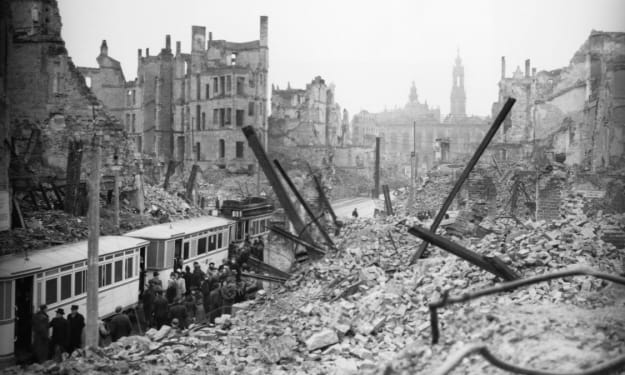
On 13th February 1945 Great Britain committed one of the worst war crimes ever perpetrated, namely the senseless and unnecessary bombing of Dresden that killed more than 130,000 people and destroyed one of the most beautiful and historic cities of Europe.
By John Welford6 years ago in Serve
Operation Anthropoid: 78 Years on.
In 1942, a British-Czech-Slovak joint operation successfully assassinated one of the most fearsome and high-ranking Nazis in the Third Reich. Regarded by many as the darkest figure in the Nazi elite, Reinhard Heydrich died due to injuries sustained in an ambush on his personal vehicle, which was struck by an explosive device on May 27 of that year.
By Louis Fell6 years ago in Serve
World War II
There has been a few key moments in history where the world stands together in the name of peace and liberty. It is in these times that differences are forgotten and unity grows. In addition, there are also times when some nations are united and some are not, which allows the world to be broken and for its citizens to pick sides. World War II happened because of a cruel and harsh set of rules placed on one country, it was also one of the bloodiest wars that the world has seen and lastly, it caused the world to be even more defensive and build more destructive weapons.
By Flying Ace6 years ago in Serve
An Irishman, an Officer, a General Officer, a Russian Field Marshal
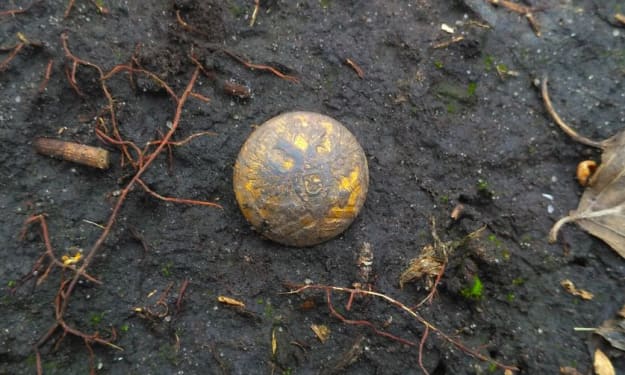
In 2018 my friends from Russia found the place where a battle took place. That was quite an undistinguished place far away in a steppe. Among the findings there were relics which are rather common for such places – bullets, individual equipment, horse harness, cold-arms, etc.
By Peter Harrington6 years ago in Serve
Remembering Peace
For several years, I went to the Service of Remembrance to take photographs and talk with Evan, who served on five continents in the Second World War. Evan was always very humble about what he did for this country during that war, and I don’t think he ever fully appreciated what his service meant to others.
By Catherine Anfield7 years ago in Serve